
North Wales’ Forgotten Railways
January 22nd, 2017
Here in Snowdonia, we love a good old fashioned steam train! And Great Britain has enjoyed a love affair with railways since Trevithick’s first railway steam locomotion was built in 1804. And when George Stephenson opened his first public steam railway twenty years later the golden age of Britain’s railways had begun. The railways opened up new means of transport for industry and trade, and later shaped the way a country lived, travelled, worked and even went on holiday. And in rural North Wales in the mid 19th century, the ability to transport precious goods, and later, people, opened up the country beyond the local area. For the vast majority of ordinary people, travelling further than a few miles away from home was something they could only previously have dreamt of.
The building of the railway network during the nineteenth century was rapid and haphazard, often with several companies building competing routes in similar locations. Although the railways remained the king of transport, for both passenger and freight for over a hundred years, the age of railway was not to last.
The country’s railway network was in rapid decline by the 1950’s as passengers and freight turned to road transport as a more convenient, quicker, safer and often cheaper way to move around the country. Britain was also lagging behind in new train technology – as diesel and electric fever gripped much of Europe and America, here, we were slow to make the transition from steam. The post war years saw huge cut-backs in railway budgets, as well as strikes by railway workers and competition from new and more convenient forms of transport like cars and trucks.
And so enter Dr Richard Beeching, a name that rarely conjures positive images. In the 50 years since his report into the state of Britain’s railways was published, Richard Beeching has become one of the country’s most unpopular civil servants; his name synonymous with cuts, closures, protests and outcries from angry railway users and enthusiasts.
It’s been almost 54 years since the publication of the infamous “Beeching Report” – the railway cutbacks that were later said to have re-shaped the transport map of Britain. With no background in transport or the railway industry, Beeching was an engineer at chemical company ICI when he was persuaded by Harold Macmillan’s government to take on the role of Chairman at the new British Railways Board in 1961. Beeching was tasked with making recommendations to revive the British railway network, shake the industry out of the massive debt it was in and save it for future generations of train passengers.

Dr Richard Beeching (wikicommons)
After two years of investigations, Beeching published his report The Reshaping of British Railways on the 27th March 1963. The report recommended that 2,363 stations should be closed along with 5,000 miles of railway track; representing almost 30% of Britain’s railway network.
Many of the lines recommended for closure were small, rural branch lines, including the Barmouth to Dolgellau line. And although the scars of abandoned railway lines criss-crossed the country, many of the disused lines rose from the ashes of Beeching’s axe into new and exciting ventures. Lots of old railway lines across the country were converted into leisure trails, for cyclists and walkers, like The Mawddach Trail, a nine mile off road cycling track that links the mid Wales town of Dolgellau to the coastal resort of Barmouth, using a section of the old Ruabon to Barmouth line. The scenic route offers stunning estuary views in the foothills of Cadair Idris, and passes through two RSPB nature reserves, rich in bird, animal and plant life.
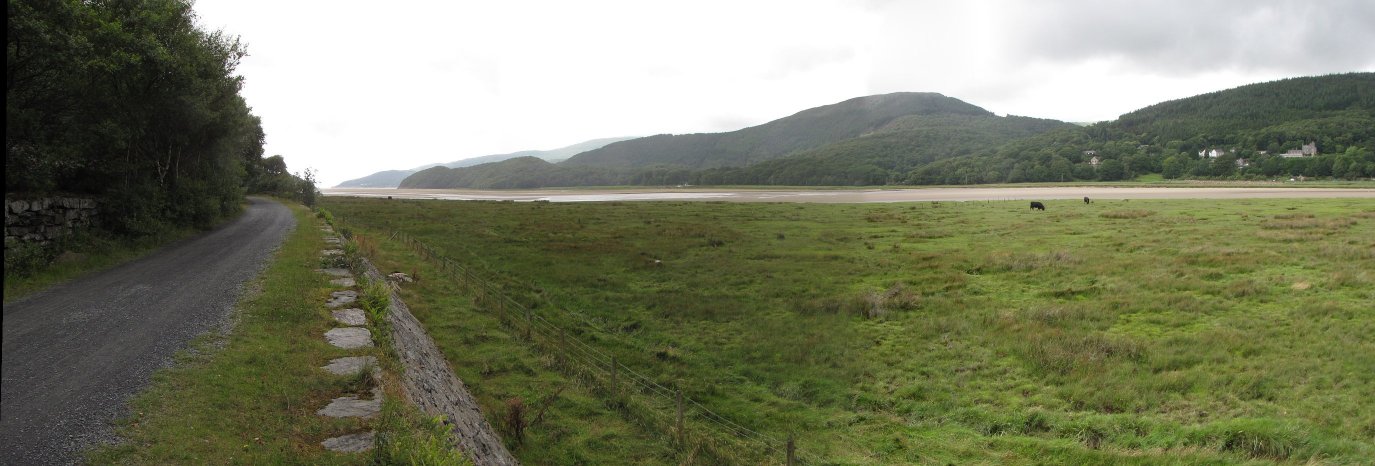
The beautiful Mawddach Trail (wikicommons)
Perhaps one of the most well loved uses for old railway lines are the sections that have re-opened as heritage railways. The Bala Lake Railway is a fine example that occupies part of the Ruabon to Barmouth route track-bed. A four and a half mile section along the southern shore of Bala Lake was re-laid as a narrow gauge railway and opened in 1972; it is now one of the area’s most popular tourist attractions.
So it seems that despite the negative connotations and public outcry after the publication of The Reshaping of Britain’s Railways, even Richard Beeching could not suppress the spirit of the railway, and those that were determined to see a treasured national institution live on, albeit in many different ways.