
The Legend of Tiffany
November 17th, 2019
Tiffany & Co is one of the most iconic brands in the world. From a small shop and humble beginnings, Charles Tiffany became the world’s master jeweller.
From humble beginnings and a small shop on Broadway in New York, where the total takings from the first day of opening in 1837 were less than $5, Tiffany and Co has become a multi-million dollar global empire and has captured the heart of fashionistas, romantics and idealists chasing the American Dream the world over. Tiffany’s is not just another brand, according to the company’s PR department; it is a symbol of “romance, style, quality and luxury”.
The man behind the Tiffany and Co story is its founder, Charles Lewis Tiffany. Described as the man who shaped the ideal of luxury for American society, Charles Tiffany was a man with commercial vision, imagination and the drive to create a legend. With clever marketing ideas and the desire to create luxurious, coveted and quality designs he established not only an extremely profitable company, but a brand that shouts a statement without saying a word.
Tiffany and Co didn’t start as jewellers. The very first shop, opened by Charles Tiffany and his friend John Young, sold “stationary and fancy goods”. The shop soon flourished as the high society of 1830’s America hunted out the unusual and exotic wares on offer.

Tiffany bought his first diamonds when French aristocrats returning to France after the revolution of 1848, wanted to exchange their jewels and diamonds for cash. The New York press ran with the story, and Tiffany was dubbed as “the King of Diamonds”. Such exotic and beautiful diamonds and gemstones had never been seen for sale in the US before and Tiffany had made himself he most talked about jeweller in the country.
Tiffany and Co also invented the design of the Tiffany mounted ring setting. This jewel mount holds the diamond away from the ring so that the dazzling beauty of the stone is perfectly captured and it is still the most fashionable design of engagement ring setting.
Tiffany pieces found their way to the rich and famous and into the history books. A dazzling silver decanter was presented to President Lincoln in 1861 to celebrate his inauguration and in 1885 and the Tiffany’s chief designer James Whitehouse re-designed the Great Seal on the American Coat of Arms. Tiffany and Co also created the very first baseball World Championship winner’s trophy in 1888. Tiffany and Co had certainly established itself as the most patriotic and forward thinking jewellers in the US.
With the dawn of the Hollywood age and the rise of the celebrity in the 20th Century, Tiffany and Co were producing jewellery that the rich and famous queued up to wear and the public dreamed about owning. They commissioned collections from leading designers like Frank Gehry and Jean Schlumberger and often released very limited edition collections as fashion houses and magazines fell over themselves to be the first to display new pieces. Some Tiffany and Co pieces are highly regarded as works out art and are displayed in eminent galleries and museums.
Hugely famous actresses, singers, aristocrats and leading ladies were pictured wearing the latest Tiffany designs, and Audrey Hepburn became the second of only two women to ever have the honour of wearing the renowned Tiffany Diamond in publicity pictures for Breakfast at Tiffany’s.
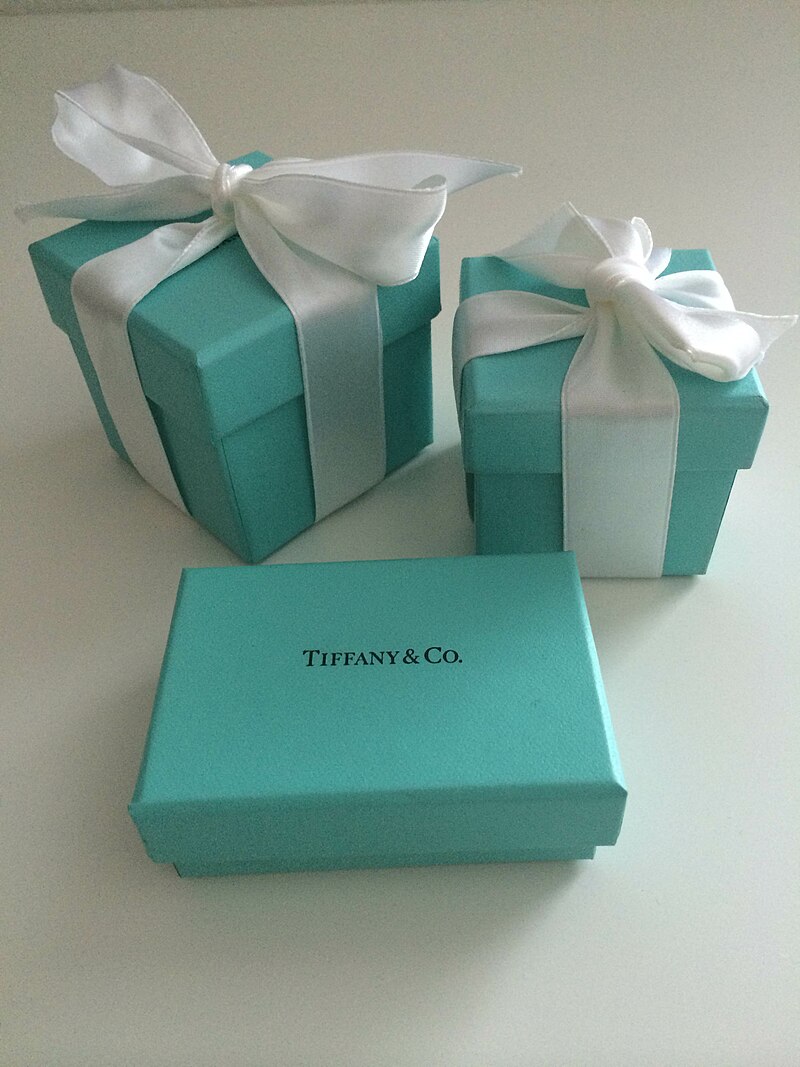
Tiffany and Co aren’t only famed for the treasures inside the box either. The brilliant duck-egg blue box and eye catching sophisticated white ribbon make a huge statement about the elegance and beauty that lies inside. So important is the little blue box to Tiffany and Co’s marketable image that they have issued a copyright on the shade of blue known as Tiffany Blue.
One thing’s for sure. When you float out of Tiffany’s flagship Fifth Avenue store with that perfectly wrapped little blue box inside the famed blue shopping bag, you haven’t just bought a beautiful piece of jewellery or even a work of art. You have just bought an experience; a moment of luxurious living and a piece of fashion history.