
Snowdonia’s Amazing Sand Dunes
April 26th, 2017
The sand dune is one of the Welsh coast’s most prominent contradictions. These vast areas that dominate the coastline of Wales are home to sprawling and enormous walls of shifting sand; at once both huge and impenetrable but also incredibly delicate and fragile.
A grain of sand on its own is tiny and insignificant, but when nature clusters hundreds of billions of them together the effect is maze-like. The sand unites to create towering dunes that stand tall above the human footprints that tread softly across them or the plants and animals that make them their home.
Sand dunes are some of the most important eco-systems along the coast, providing safe habitats for small animals, insects, plants and birds. They are also invaluable barriers against rising tides and floods for the hundreds of coastal communities that live behind them.
It’s no surprise that many of these important but fragile environments are heavily protected. According to figures from the Countryside Council for Wales (CCW), over 75% of the coastline of Wales between the high and low tide lines are designated as Sites of Special Scientific Interest (SSSI). These special designations serve to protect the sites from development, erosion and building.
But, sand dunes are continually under threat, and not just from human impact. Changes in weather and environmental habitats can all have an effect on the life of our dunes.
The dune systems at Ynyslas on the Ceredigion coast at mid Wales are one of the most renowned in the country, and they are known not least for the enormous numbers of birds and wildlife that make their home in the rolling sandy hills.
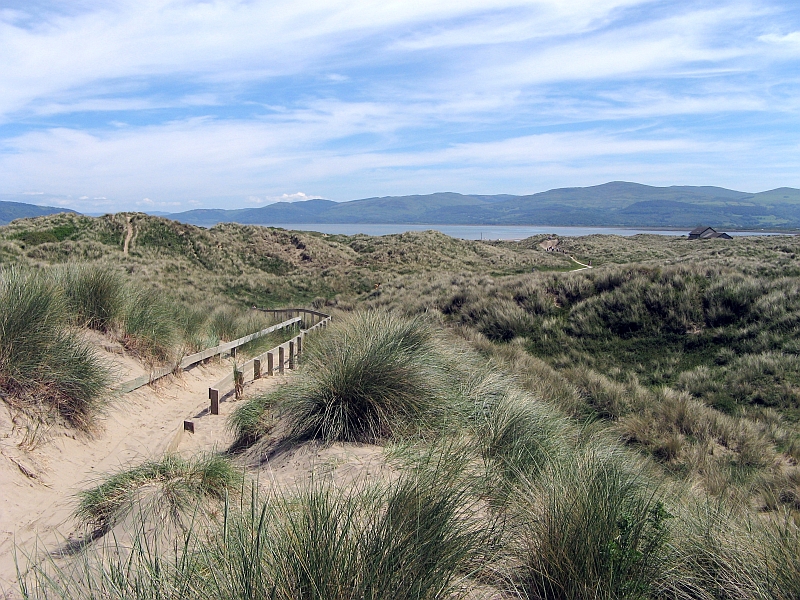
From wikicommons
The dunes are part of the Dyfi Valley Nature Reserve, and animals that live here include lizards, stoats, rabbits and voles, not to mention the vast numbers of birds that swoop, hover and fly over the dunes and banks, making their nests or on the look-out for pray. Skylarks, ringed plovers, gannets and manx shearwater birds are all regular visitors to the Ynyslas dunes.
Sand dunes look arid, dry and unwelcoming, so their ability to support huge varieties and numbers of different wildlife is astonishing. What is it about sand dunes that make them a haven for small animals and birds? One reason is that the range of different conditions that usually exist in sand dunes, from dry to moist and from open to sheltered for example, make them attractive homes for a variety of animals.
You’ll also find incredible sand dune eco-systems at Morfa Bychan (near Porthmadog), Harlech, Shell Island (near Llanbedr), Barmouth, Pwllheli and Tywyn.
So why not explore some of the coastline’s most interesting natural feature – and see what you can spot? Remember to explore gently and never remove anything from a sand dune.

From wikicommons (By Goleudy from Wales)