
End of Pounds, Shillings and Pence
February 9th, 2016
Now, hands up who remembers the old money? Not that we want to embarrass any of you into showing your age!…… But did you know that this week marks the 45th anniversary of the end of pounds, shillings and pence and the end of currency in Britain as we knew it then. 45 years!
Monday the 15th of February 1971 was dubbed Decimal Day, the day when Britain would change from it’s old style currency to the new-fangled decimalised system, when everything was counted in units of 100.
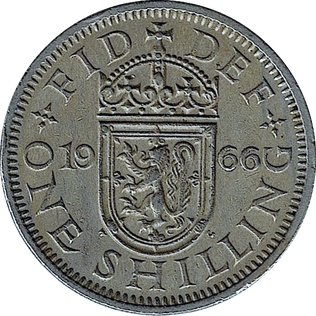
An old one shilling coin (Wikicommons images)
According to the old system, a pound was made up of 240 pence, which were denoted by the letter d, and are now known as “old pence”. A shilling (denoted by an s) had 12 pence and 20 shillings made up a pound. Under the decimalised system of course, there are 100 pennies to a pound (£).

An “old” penny is technically worth 1/240 of a modern £
Although decimalisation didn’t occur in Britain until 1971, it had been in the planning for centuries. The idea had been suggested in parliament as far back as 1824, after France introduced the decimalised Franc in 1795. A Decimal Association was founded in 1841 to promote not only decimalisation of currency but also metrication of weights and measures – mainly because it was thought the change would boost international trade. So the run up to actual decimalisation was a long one, but that didn’t mean the nation was entirely ready in 1971.
In order to prepare the country, the introduction of new coins and the withdrawal of the old ones was a long one – 5p and 10p coins were introduced three years earlier in 1968. And who could forget the Max Bygraves song, aptly called “Decimalisation”!!
So this week when you’re counting the money in your piggy bank, count your lucky stars that you didn’t have to count out 240 pennies for every pound! Or try to add up an order at the bar that was a crown, 1s and 10d… and then work out the change from a 10s note!