
Porthmadog’s Maritime History
April 14th, 2016
We know that the whole of Snowdonia is steeped in history and culture, but we like to think that our little corner of this beautiful part of Wales is absolutely packed with heritage. The Oakeley Arms itself dates back hundreds of years and was once part of an historic family estate. And we don’t need to travel much further to find some important history right on our doorstep.
The town of Porthmadog is just a few miles from us here at the Oakeley Arms Hotel, and today on the blog we’re celebrating Porthmadog’s Maritime History. The town is relatively new – it’s just 200 years old, but it’s had a big impact in that short time! Porthmadog was originally created when MP and businessman, William Alexander Maddocks, constructed the huge stone structure now known as Y Cob. By building this mile-long structure that linked one side of an estuary with another, Maddocks not only created a safe route across the perilous Traeth Mawr (English: Great Sands) at the mouth of the estuary, but he reclaimed great swathes of land from the hungry tides of Cardigan Bay.
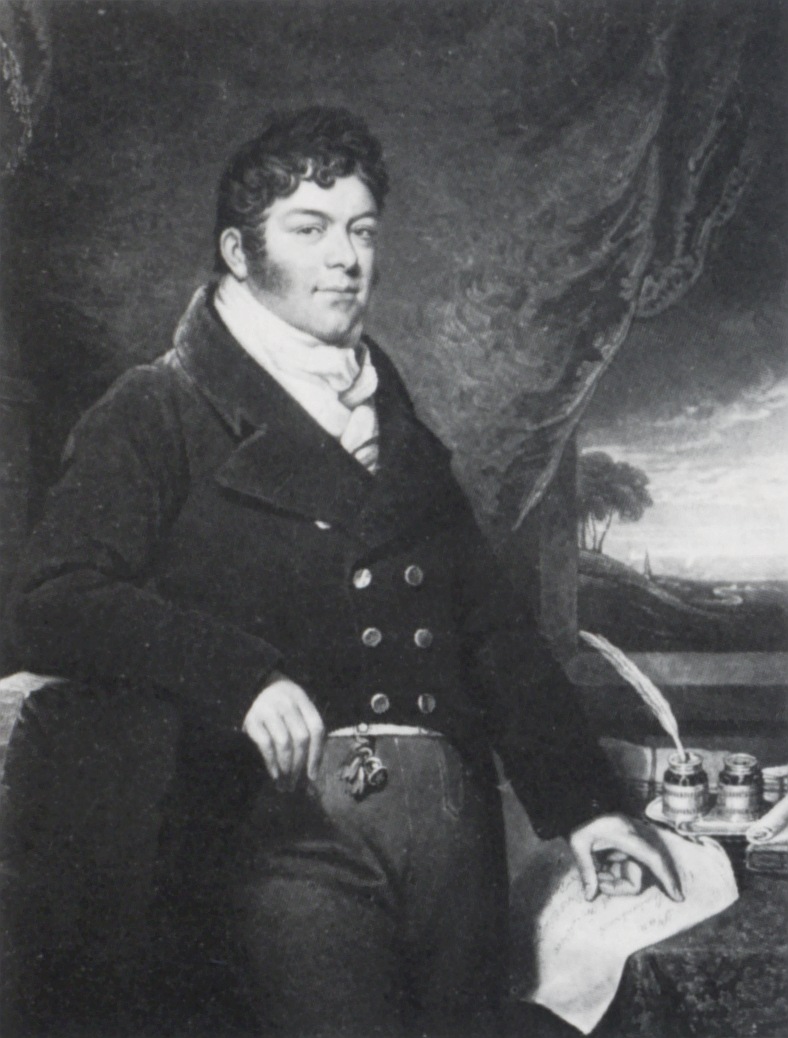
William Alexander Maddocks (Image by wikicommons)
Although William Alexander Madocks was not a local man, he left a legacy that would forever change the landscape and fortunes of this once sleepy corner of Wales. Madocks was a man with big ambitions. And once work on the Cob was completed he set about designing the town that would bear his name. Porthmadog, or Portmadoc to use its anglicised name, rose up from the marshland and by 1825 a harbour, wharves and a small town had emerged. The town grew rapidly around the slate mining industry of nearby Ffestiniog. In the early nineteenth century, the roofs of expanding industrial cities cried out for quality slate, and the dark hills and mountains of sleepy Welsh farmland revealed a treasure trove of fortunes in the shape of grey roof tiles.
Tonnes of slate were carted from the Ffestiniog mountains to the new harbour at Porthmadog to be exported around the world. As well as wharves and warehouses, several ship-building yards sprung up alongside the quay to satisfy the demand for cargo vessels and Porthmadog soon became as famous for its magnificent ships as it was for its slate. Majestic schooners, brigs and barquentines were carved, screwed, bolted and chiselled into life and set sail from Porthmadog with their precious cargo.

Trade increased during the 1830’s as the demand for slate grew to fever pitch, particularly for fast growing German cities. The mid 1830’s saw the birth of the Ffestiniog Railway and the horse drawn carriages from the quarries were replaced by fast steam trains, delivering many more thousands of tonnes of Wales’ grey gold to Madocks’ new port.
Porthmadog’s population grew rapidly during the mid nineteenth century and the harbour and town flourished. By the 1880’s however, the expansion of the railways and a severe depression led to the decline of ocean exports and ship building in the town had all but ceased.
However, that wasn’t the end of the shipping legacy. Years of experience and knowledge meant that Porthmadog ship builders pioneered the development of the Western Ocean Yachts, designed for the salt-cod trade of Newfoundland. These beautiful three mast schooners were large, strong and steady to cross wide and wild oceans but small enough to navigate the rocky shores and narrow estuaries that awaited them on the other side of the world.
Sadly, by the early twentieth century the ship builders of Porthmadog had all but vanished. The slate industry had diminished and the lucrative German market ceased suddenly with the onset of the First World War, which also meant that manufacturing resources were required elsewhere. Porthmadog’s last ship was also perhaps the most famous. The Gestiana was launched in 1913 but was lost on the coast of Newfoundland on her maiden voyage.
Today, not much remains of the town’s busy ship yards. Working vessels have been replaced by cruisers and the harbour is lined not with cargo ships but with small leisure yachts. But the spirit of this ambitious, pioneering and once great harbour lives on its people, whose histories are knotted among the sheets and sails of great ships that helped to build an industrial world.
